Showing posts with label health. Show all posts

Friday, January 6, 2012

Want to Keep the Flu Away from YOU?

Want to keep the Flu away from you this season?
Here is the way to do it!


A GREAT company called HerbaLife has the products you need to keep you and your family healthy and happy during the flu season. Nobody enjoys getting sick, so if you can find the product to prevent it, wouldn't you want to try it?!

One of HerbaLife's consultants has graciously offered to give you an extra special deal on your order. You will be paying next to NOTHING for shipping and handling if you order these products through her instead of the corporate website. You can't beat that!!

These are the products that are available to keep you healthy during the flu season. There is something for everyone in the family!

Schizandra Plus 60 tablets for $16.80 (Plus $1.00 Postage and handling). Supports
Immunity and cellular health; and provides general antioxidant support
against free radicals. Supports your body's natural defense against oxidative stress.

RoseGuard 60 tablets $25.70 (Plus $1.00 Postage and handling).
Supports your body's natural defense against environmental toxins.
Contains astragalus ( traditionally used to support healthy liver function) and
Helps to recycle the antioxidant activity of Vitamin E.

Garden 7 90 Tablets $43.20 (Plus $1.00 Postage and Handling).
Gives your body the nutritional benefits of 7 servings of fruits and vegetables!
Provides key phytonutriensts to support your vital organs, and helps fill the gaps in your diet.

Hand Sanitizer $5.50 (Plus $1.00 Postage and Handling).
Alcohol-free spray.
Kills 99.99% of the most common germs!
Fits in your pocket, purse or travel bag.

Best Defense $10.75 (Plus $1.00 Postage and Handling).
Contains a robust source of Echinacea and 1000 mg of Vitamin C!
Also contains Zinc sulfate (which increases the body's cellular immune defense
and helps boost your immunity when your feeling under the weather).
Convenient quick dissolving tablets
AND comes in citrus mint and orange Boost (10 tablets per bottle)

Herbalife Multivitamin Complex 90 tablets $21.60 (Plus $1.00 Postage and Handling).
Our vitamins have over 20 essential nutrients and antioxidants.
Includes folic acid, calcium and iron
Supports your immune system and promotes healthy bones,
skin and hair!

Multivites for kids 60 tablets $18.95 (Plus $1.00 Postage and handling).
Fruit flavored chewable vitamin for the kids
Provides 100% of the daily value of essential vitamins
children ages 4 and up need daily!
Excellent source of B-Complex vitamins, Iron, Zinc, and
antioxidant Vitamins A, C, and E!
PLUS... Fun sports shapes!

Where else can you get these products and only pay $1.00 shipping and handling?! NOWHERE! So get your order placed TODAY with Ruth Davis. You can call her to place your order or request a catalog at 330-620-8344 OR email her at jwdii1 (at) sbcglobal (dot) net.

Review by Joanna LaVan

Monday, November 28, 2011

Real Food Freezer Cooking

I am a homeschooling mom of four children under 9 who insanely adds two blogs, freelance writing, a piano student here and there and occasional ministries at church to my already crazy schedule. When someone mentions the concept of once-a-month-cooking to me, my eyes glaze over really fast. A full day in the kitchen easily stretches into 3 for me by the time I add in the typical interruptions. While I love the concept, I have decided it is not for me.

However, Crystal of Money Saving Mom has made the idea of smaller batch cooking popular. I have recently tried to keep a step ahead of my family's voracious appetites by doubling a meal, cooking one and saving one for the freezer.

Does this work for real food? Absolutely!

Right now, I have an extra pan of baked oatmeal in the freezer, a cheeseburger meatloaf without the cheese on top and a batch of waffles. All of this required no extra time on my part this week since I simply doubled up what I was making and put the extra in the freezer. I do this with breads, too. I just make two loaves of cornbread, banana bread or whole wheat bread instead of one.

If we have leftover pasta or rice after a meal, I throw it into a gallon plastic bag and save it. Both of these heat up for a quick lunch. We added spices, butter, shredded cheese and chopped sundried tomatoes to leftover spaghetti  this week, and it was delicious!

When I brown ground beef for a meal, I brown an extra pound or two and put a bag of it in the freezer for a quick meal later. When I make chicken stock, I freeze it in two cup portions in sandwich bags. These thaw quickly for a quick soup or chicken enchiladas.

One thing that doesn't seem to work is soup. I make a double batch every time, and we almost always seem to finish or nearly finish the extra portion. I guess we are just eating more!

What are your favorite real food freezer meals?

Tuesday, November 15, 2011

Adding Color to Your Kid's Meals

We've all heard the "Five A Day" slogan to encourage our kids to eat more fruits and veggies. Some even encourage us to have them eat a rainbow meaning many different colors.
colorful_veggies 004
This gave our family a fun idea. We decided to chart not only the fruits and veggies we ate through the day but also what colors we ate. Our only rule was the fruit or veggie had to be recognizable as it was in its original state. For example, applesauce didn't count for apples, but we did allow dried fruit to count.

After each meal, we got out our individual pieces of white printer paper and colored with colored pencils on our rainbows. For breakfast one had grapes and someone had blackberries. Most everyone added dried cranberries to their granola. The kids were excited to color one arc of the rainbow purple for grapes and another red for the cranberries.

When lunch came around, one of the kids asked if they could warm up some leftover green beans from the night before. I nonchalantly replied, "Sure," but inside I was beaming. It was working!
By the end of the day, we each had an impressive rainbow. And through the day, we had much more enjoyable and delicious meals.

What methods do you try to get your children to eat their colors?

Saturday, November 5, 2011

Fast Food Alternatives

Busy moms that have children involved in a lot of activities struggle with not going through a drive-thru once in a while to make things easier. At least I struggle at times with this. Earlier this year, I did a 3 month experiment; and we didn't eat fast food from any of what I call the "Big 4". My children had been sick so often the previous months, but their immune health improved dramatically during our experiment. Since then, I've tried to make fast food an increasingly rare thing.

Here are some alternatives when you (or your kids) want fast food:

Arby's

Saute some sliced onions and garlic in olive oil until tender. Dump in some leftover roast beef. If you had gravy with it, that's even better---dump it in, too. Simmer for a few minutes to heat through and allow flavors to blend. Serve it as it is or add some ketchup for barbecue beef. We've added horseradish and cheddar cheese as well. When everything is mixed/melted well, place mixture on buns and serve. Yum!

Burger King
Mix some of your favorite spices into grass-fed ground beef. Our rule of thumb is 4 hamburger patties per pound. Spread the inside of hamburger buns with butter and grill the inside only as you would for grilled cheese sandwiches. In the meantime, saute some onions and garlic and mushrooms if you have them in butter until tender. This will smell heavenly! When your burgers are done, put them on the grilled buns, top with provolone cheese and mushroom mixture and spread with mayo or Ranch. Delicious!

McDonald's
Buy or make some whole wheat English muffins or biscuits. If you like the scrambled egg-type muffins, scramble your eggs. If you like the fried egg kind, fry an egg, then break the yolk before putting in on the muffin. Top with sausage or bacon, then with a slice of cheese. I would recommend homemade sausage and nitrate-free bacon. So much tastier and without the stomach ache afterwards. Microwave or place in toaster oven for 30 seconds to 1 minute to melt the cheese.
You can eat this with a homemade granola parfait, and you'll never miss the Golden Arches!

Wendy's
Cut several chicken breasts in strips. (You don't have to do this, but it makes them cook faster.) Sprinkle them with your favorite spices and saute in a butter/olive oil mixture. When they're almost done sprinkle with garlic powder and a few tablespoons of lime juice. Stir well to coat. Put on grilled buns or on a salad for a delicious grilled chicken alternative.

We don't eat at Taco Bell, but if you do, tacos and burritos are very easy to make at home.
If you take just a little time to prep these ahead, you can wrap them in foil and put them in individual bags and call them kids' meals for your kids to chomp on as you drive around.

Still not convinced fast food is that bad? Read about Morgan Spurlock's experiment to eat only McDonald's food for one month. Warning: Not written from a Christian perspective, so there may be some objectionable language.
For those times you just can't escape fast food, this book offers the best alternatives plus many healthy tips and recipes for making good food for kids at home.

Disclosure: This post contains some affiliate links. Read my full disclosure here.

Tuesday, November 1, 2011

Doesn't Real Food Take a Lot of Time?

When I am asked this question, the first thing that comes to my mind is, "Compared to what?"

If you're used to making a frozen pizza for dinner, then making it homemade will take a bit more work and time. However, if you are used to ordering pizza, I'm convinced that you could have a homemade one on the table at least as quickly as it takes for the delivery guy to arrive.

Fast Food

This?

Cheeseburger...On the Side
Or this?
If you're used to running through a drive-through on the way home from school/work/soccer practice, then making  cheeseburgers or chicken nuggets homemade might take more time. On the other hand, if you're used to dinner at a sit-down restaurant of any kind, you can make these foods at home in the same amount of time it takes for the waiter to get the food to your table.

For me the trade-off for better taste (not to mention health) is totally worth it. I used to dump a can of Campbell's soup in a pot on soup night. It only takes a little longer to make a delicious homemade soup and there is no comparison! Homemade Hamburger Helper or Macaroni and Cheese takes pretty much the same amount of time. And sauteing that chicken breast instead of deep frying it? Real food is a time saver in that case!

Here are a few other real foods that improve the taste phenomenally but take less than 10 minutes of hands-on time:
  • homemade taco seasoning instead of  the little packets
  • homemade popcorn instead of  microwave popcorn packets
  • oven brown rice instead of  packets of seasoned rice
  • cheddar potato strips instead of frozen french fries
  • homemade bread in bread machine instead of frozen dough
  • oven roasted chicken instead of rotisserie chicken
Here is an entire real food meal that take less than 30 minutes of hands on time:
An hour to two hours before you eat, dump 2 cups brown rice, a dash of olive oil and 5 cups water into a 13 x 9 pan. Sprinkle with salt and cover with foil. Set oven on 400 degrees and forget about your rice for about an hour. When the water is absorbed, just turn the oven off until you're ready to eat it.
About 15-20 minutes before you want to eat, pull some cooked meat out of your freezer. Our favorite is leftover steak cut into thin strips. All you need is one or two leftover steaks for this meal. You can also use cooked, diced chicken or even cooked hamburger.
Put 1 or 2 T. olive oil in a skillet, toss in some chopped onion and minced garlic (I just buy it in a jar). Now toss in your steak and any frozen or leftover veggies you have in the fridge or freezer. (I would skip the eggplant, but it's totally up to you!) Sprinkle on some seasonings of your choice.
While that's getting warmed and the flavors are blending, toss together a salad. You probably even have time to whip up a homemade dressing.
Put a generous amount of rice on each plate, top with the meat mixture and call it stir fry. My husband likes to put soy sauce on his. I have an aversion to anything soy, so I like mine best plain.
Good things sometimes take more time, but real food really doesn't require you to be in the kitchen all day. Unless of course, you include the dishes.

Saturday, October 22, 2011

The Real Scoop on Beverages

I'll never forget the first time I heard someone speak on healthy eating. I sat in awe at things I'd never heard of before with a bit of skepticism and inner eye rolls, I must admit. I heard the speaker explain about the danger of  just about every food I'd ever eaten and of those I was giving my children. I had many questions, but the one I actually asked was, "What on earth do I give my kids to drink?" I'll never forget her sweet smile as she replied that the best drink for children was clean, pure water. I remember thinking that I could never get my kids to drink water.

I'm going to skip the science on the following information since it is readily available in many great books and online. This is just a starting point for you to do your own research and come to your own conclusions about what works for your family regarding beverages.

Soda What's really wrong with pop (a.k.a. soda or fizzy drinks)?

If you take a look at the ingredients of a can of pop, there are really no good ones. All of them have harmful or potentially harmful effects on health. The two top reasons I don't like my kids to have much pop are the corn syrup/sugar that depresses the immune system and the combined ingredients that actually draw calcium from their bones which are growing at this stage of their lives.

But I give my kids sugar-free drinks!

Yes, sugar is something to limit or avoid in children for a myriad of reasons, but what replaces the sugar in those drinks? If it is what I call "fake" sugar, I believe it is worse. Artificial sweeteners make the body crave more food since it is promised sweetness in taste but isn't actually getting it. This can cause obesity. They are also known to cause neurological problems and cancer in lab animals. If they caution pregnant women and babies against them, then I don't think they are good for children or non-pregnant women either.

182_2631  fruitSo juice has to be the answer!
Not exactly. God designed fruit and vegetables for us as the most perfect foods for health. Each fruit or vegetable is a complete package with everything we need to digest and use the nutrients. When we take only the juice out of these fruits and drink it in large quantities, we are just drinking the sugar from the fruit. We were not intended to consume that much sugar, natural though it may be.

What other options are there?

I will tell you how we consume beverages in our home. This is not the only or the perfect way. I'm only telling you to give you some ideas if you're new to healthy beverages. We are not yet to the drinking only water point, nor do I expect us ever to be.

With the children, I try to limit any beverages besides water to meal time. They each have their own water bottles which they keep in the fridge and sip on if they get thirsty. For breakfast, they either have 100% juice diluted with water about 3:1 (my 9-year-old gets more juice than that and my baby gets less) or Emergen-C. I put 1/2 packet in a glass of water for each kid. At lunchtime, we usually just drink water. For supper, I usually make northern sweet tea (meaning I don't put so much sugar in it is syrup-y, but it still tastes sweet). Sometimes in the afternoon, my daughter will make some hot tea. She loves herbal teas, but occasionally she drinks green or black--whatever we have on hand. You will notice that milk is absent from this list. I do give my kids milk up until they are 2, but I don't encourage it after that. I think milk was created to nourish baby cows (not humans); and I don't have a source for raw, unprocessed milk so we don't use it much as a beverage.
coffee WavesAs for adults, I'm not against caffeine. It doesn't seem to have any negative effect on me unless I drink it in excess. If I skip caffeine for a day or two, I don't seem to have any withdrawal effects, either. I do try to limit it and only drink it in naturally occurring sources. I drink my morning coffee and sometimes afternoon coffee. I like to make a bottle of green tea and add my full packet of Emergen-C to it. I occasionally drink pop, but when I do it seems all I can taste is the corn. Ugh! Our family abstains completely from alcoholic beverages. We feel that the negative health effects outweigh any positive health effects such as those touted by red wine enthusiasts. The moral complications also cause us to avoid them as they seem contrary to wise living.

Where do we go from here?

My personal goal for myself and our family is to completely eliminate pop. I have done this with artificially sweetened products. They simply never come into my home and I never allow my kids to drink them elsewhere with my knowledge. I'd love to find room in our budget to purchase raw milk (or at least not homogenized) for my baby and our cooking needs. Since I'm not a milk lover, cultured dairy seems unappealing, but I would like to try it sometime. Although I enjoy my tea unsweetened, I just can't see my family accepting that. But who knows? I never thought my kids would love their water bottles!

Thursday, October 20, 2011

How Do I Get My Kids to Eat Real Food?

A big problem for those that are transitioning to the real foods is getting their children to go along with it. It's hard enough to give up your Coke, but taking the goldfish crackers away from your two-year-old? Especially if that is one of three food groups he will eat. (Not that I would ever give goldfish crackers to my child or that one of my children would be that picky. Ahem.)

The simple thing would be to hook up an IV at birth giving them straight whole fruits and vegetables. Hmmm....that's probably the idea behind eating so healthfully in pregnancy. I don't know about you, but in the early weeks of pregnancy, lettuce and broccoli just didn't do anything for me except trigger a gag reflex.  (Not that I would ever live on white English muffins, saltines, ginger ale and fruit snacks in early pregnancy. That would just be horrible nutrition!)  

Anyway...
Since IVs at birth are not plausible and moaning about what one ate during pregnancy is not helpful when you have children seated around the table, what is a parent to do?

Richard (12m) eating an apple1. Skip the baby food. Haven't we all looked at that little jar of pureed green beans and thought, "Yech!" And can anyone tell me why the jarred bananas are pink?!

One of my children had a total of 3 - 5 jars of baby food in his whole life. He grew just fine. In fact, people loved to pinch his cheeks, he was such a "filled-out" little baby.

It's cheaper to buy a bunch of bananas, leave them sit on the counter for a few days, then mash them with a fork. Or buy a big jar of natural applesauce that actually stays on the spoon long enough for you to get it to the baby's mouth. Use your blender and you can puree the real green beans yourself. I think (in my obviously non-expert opinion) this goes a long way towards developing a baby's taste for real foods later on.

2. Give it to 'em straight. I'll never forget the first time my oldest son had a broccoli casserole he promptly spit it out with the exclamation, "Mom! There's something in my broccoli!" I haven't made another one since. We just eat it "straight" with some sea salt and occasionally some real cheese.

Vending Machine Lunch3. Don't bring junk into the house. I think it was Kevin Leman, child psychologist, who had a mother come to him moaning that her child would eat nothing but junk food. He asked her how the boy was making the money to buy it and  from what store he purchased it. She had to sheepishly admit that she bought it and brought it home herself.

The answer is obvious. If it's not there, they won't eat it. Probably the "junk" they get elsewhere won't be enough to do damage if they aren't getting it at home. (At least that's what I'm hoping! Not that I ever allow my children to eat chicken nuggets and french fries on road trips! I mean that would just be ridiculous with my writing a blog post like this!)

4. Don't make food a big deal. The truth is that at some point, if your child thinks carrots or broccoli is a big deal to you, he will simply refuse to eat it. Kids are smart like that. They know how to do power plays. (Not that I would have any experience with a child like that. Of course not!)

Offer the real food and limit the junk food, but don't overreact if your child refuses the good and leans toward the "bad". The simple truth is, when they are hungry, they will eat. If there is something real to eat, they will eat the real food. Sooner or later.

Sunday, October 16, 2011

Switching to a Healthier Breakfast

I think one of the easiest meals to make changes to when switching to whole foods is breakfast. This is where I started "way back when".
Our "Before" Menu
Lucky Charms or Cap'n Crunch
Blueberry and Strawberry Muffin Mixes
Pancakes or Waffles from the WalMart freezer section with Mrs. Butterworth's syrup
Scrambled Eggs and White Toast with Jelly
Occasional Doughnuts from a local bakery
Orange Juice
Chocolate Milk
Coffee with flavored creamer and sugar

Our "After" Menu
Oatmeal
Granola with Frozen Fruit and Yogurt or Dried Fruit, Nuts and Milk
Occaional Cereal*
Homemade Whole Wheat Pancakes or Waffles with real maple syrup
Scrambled Eggs with Whole Wheat Toast and Fruit Spread or Homemade Strawberry Jam
Omelets or Frittata with Veggies and Cheese
Occasional Homemade Muffins
100% Juice (1:3 ratio juice to water)
Emergen-C packets in water
Coffee with natural sugar, no cream
We certainly didn't make all these changes at once!

I replaced our cereal with a sugary homemade granola. I've since learned how to make it using only raw honey and healthy oil along with some almonds and dried cranberries. Yum!

I made my own pancakes and waffles with white flour, then experimented on adding healthier flours and oils. We eat them once a week or less, so we do splurge on real maple syrup.

I started buying free-range eggs from a farmer and Simply Fruit jam by Smuckers. Although they told me they use no sugar, that stuff is a little suspicious to me because it tastes so sweet! We make our own strawberry jam with white sugar; however, I try to encourage plain butter, peanut butter or raw honey on toast instead.

I love coffee, but the switch to no creamer was easy. My husband started roasting his own coffee beans and it was so delicious there was no need for cream. I also prefer the taste of evaporated cane juice or sucanat. I've even used maple syrup or drank it unsweetened at times.
I know there are a lot more changes I could make.  

What changes have you made to make your breakfast healthier?

*I choose whole grain, fewer ingredients cereals and we eat them on Sunday mornings only since I still don't consider them very healthy. As an alternative to cereal, we also have our muffins on Sunday mornings when I am a bit less lazy more in the mood to cook.

Wednesday, October 12, 2011

Where Do I Shop for Real Food?

I would love to tell you that the grocery store in your town that has the lowest prices on everything is the best and only place to get real food. The fact is that most of the food in your grocery store is probably not completely real. Even if you stick to the parameters of the store like health professionals advise now; you will pick up produce sprayed with chemicals that are possibly genetically modified, meat from animals that have been shot with antibiotics and fed foods which God never intended for them to eat, and dairy products from those same animals.

So where do you get these real foods created by God? Unfortunately (unless you enjoy shopping for food as a recreational activity like I do), you will have to go to more than one place, especially if you don't want to spend a fortune feeding your family. There are many ways to do this, so I'm not telling you the "one way" to do it. I'm just going to tell you what I do in case it sparks some ideas for your own situation.

The Farm
I get as much of our food as I can from a local farmer. We buy half a side of grass-fed beef every year so the price per pound is very reasonable. Last year, we bought our chickens from them, too. I buy our eggs, cheese, and butter from them as well as honey and maple syrup. I purchase our grains in bulk through Something Better Natural Foods. Our farmer does a bulk order from them, and I purchase from him. If you want to find a great farm in your area, check out eatwild.com or localharvest.org. Word of mouth is also helpful---that's how we found ours.

Grow/Catch it Ourselves

We don't have very much space for a garden in the city; but we grow our own lettuces, tomatoes and peppers and a few other things we try differently every year. We pick our own strawberries every June at a pick your own farm. (You can find these at pickyourown.org.) My husband fishes, so most of our fish is what he has caught. A friend hunts, so we purchase venison from him.

Wholesale Club
We have a membership to a wholesale club in our area. They have the best deals on contact lenses, but we also get some of our food products there. I love a brand of fresh salsa they carry. We also get lunch meat there (this is not a real food item, but we only eat it once a week along with our nitrate-free beef bologna from the farm). I get shampoo there for all of us and frozen fruit. A few grocery items are cheaper there in bulk like tea, coffee filters and tomato sauce. Sometimes I buy produce there if I need a bulk amount.

Health Food Store
Next to the farm, my favorite place to shop is Earth Fare. My 3-year-old says, "We're at the Fair!" when we pull in. He has never been to a fair, so you can see what his mommy's source of entertainment is! :-) I can't buy near as much as I'd like there for budget reasons, but they do have great coupons, freebies and discounted items weekly so I take advantage of those. I like to get small quantities of bulk items to try (like quinoa, raw nuts, demerera sugar, etc.) there. I get some organic produce if they have a good deal on it. I only buy our fresh fish from there (other than the fish my husband catches).  I get my kids' Emergen-C there as well as any of my Garden of Life products. I occasionally buy natural toiletry items there (although the ones I have right now, they gave me for free for exchanging my "bad" ones!).

Discount Grocery Store
We have a great chain of stores in our state that has a lot of closeout items and is the best overall store for low prices. I get everything I can't get at the other sources here. They have a small organic foods section and they carry a wide variety of Bob's Red Mill products at great prices. Their produce is very reasonable and some is even organic.

Online
The more things I get delivered to me, the less I need to shop for. I love the Amazon Moms program for more than just food items. I get diapers and wipes through them and save 30% plus get them delivered straight to my door for free! This makes them cheaper per diaper than I can get at stores in my area. I get some personal products from them as well through the subscribe and save option. I order my cleaning supplies and coconut oil online from other companies.

Regular Grocery Store/WalMart
This is my least favorite place to shop, but I do have to run here for some toiletry items and for the occasional pork we might buy. There are a few things my discount grocer doesn't carry, so I stop by the regular store once in awhile for those.

I think that just about covers it. If you're thinking, "But what about all that gas running from place to place?!" be assured that I do not go to all of these every week. I  go to most of them monthly except for my discount grocer which I visit each week.

Where do you shop for real food?

Monday, October 10, 2011

Sweeter than Honey

This is a guest post by my friend, Marion Yoder, who keeps bees with her husband on their farm.
Honey beeHoney.... the word brings to mind wholesome sweetness,  purity,  integrity. How could you possibly go wrong? The question we  really need to ask is, "Is honey all it's cracked up to bee?"   The answer is...... well,  complicated,  yes and no,  it depends,  ya know? I will try to clarify with answers to a few key questions. Hold onto your seats :-)

What is honey anyway?

No, it's not bee spit, like that kid in first grade insisted it is ;-) Honey is the secretions of flowers, collected and condensed by honeybees, to an average of 17% moisture. They must forage far and wide to get it, traveling up to 5 miles from their hive and tapping around a million flowers to make just one pound. One honeybee, in it's entire 6 week lifespan, will produce 1/12 of a  teaspoon of honey. Honey varies in color, flavor and composition depending on the flowers it was made from, but contains a blend of plant sugars, along with enzymes, minerals, and trace amounts of pollen and propolis (plant resins collected by the bees).

Does honey need to be refrigerated?

No, it doesn't. Honey has a high enough percentage of sugar that it should never go bad. Actually, honey found in the pyramids has been dated at 3-4,000 years old, and is still good!  Honey does darken with age, and may crystalize. It crystalizes most quickly at or around 46 degrees, which is why I recommend storing it in a warm cupboard rather than the fridge. :-)

                                                                     
HoneyIs raw honey better?

Absolutely! Right off the bat, raw honey tastes better, but that's just the tip of the iceberg. When honey is pasteurized, as most is, it is heated to 160* or higher. The point of this is twofold. When heated, honey gets a lot thinner, allowing it to be pumped through a super fine filter. This removes all of the pollen and propolis, as well as any fine crystals, making it more likely that it won't crystalize. Heating incidentally kills all of the enzymes as well, and changes the chemical structure of some of the sugars. The other reason for heating the honey, is to "sterilize" it, because we just shouldn't eat stuff that isn't you know, it might be (horrors!) good for us! Raw honey still contains all of the good stuff, and while it may crystalize more quickly, quite often it doesn't. Even if it does it is still fine to eat, it just has a different texture :-) I like it better for baking as it's easier to measure. The tiny bits of pollen in raw honey are what make it so good for allergies. Honey from your state likely contains pollen from plants you are allergic to, so if you take a teaspoon a day, your body gets used to those, and doesn't react as violently when it comes in contact with them. While it doesn't always work, many folks with allergies have been helped by this simple remedy.

I've heard there can be chemical residues in honey, is this true?

Yes, it is. The honey you find in the grocery stores, is usually from big companies that buy it wherever they can get it the cheapest (usually China, surprised?) and then bottle it under their name. The cheapest honey is generally from big beekeepers. These guys run 20-30,000 hives, and truck them all over, charging for pollination, which is their main income. To them, the honey is often just a "by-product". Riding a semi-truck is stressful to bees, and so there are a multitude of pests, pesticides, and other bumps in the road. The industrial beekeeper handles these stresses just like the industrial farmer. Throw chemicals and antibiotics at them! Bees store their honey in wax comb, and that wax soaks up chemicals like a sponge, releasing them into the honey in small doses. Often beeswax lasts 10-15 years, accumulating a huge load of heavy residues, things like organophosphates, oxytetracycaline, and fluvalinate. Beekeeping doesn't have to include this kind of junk, but when it doesn't, just like organic farming, it's more work.

The bottom line:
Know your beekeeper! Buy your raw honey from small beekeepers in your state that avoid the use of chemicals. Do this, and your honey will indeed live up to it's reputation :-)

Marion Yoder is a second-generation home-schooling mother of 4 (going on 5) little people. She and her husband, Joseph, live and work on his family's 190 acre farm in Holmes county Ohio. Marion started early with her love of all things natural, especially food, and has been learning more ever since. The Yoders raise bees, cattle, sheep, chickens, and heirloom veggies on their sustainable farm. Their goal is to provide local families with affordable foods raised  the way God designed them to be. They sell their wares at area farmers markets, as well as at the small store located on the farm.

Wednesday, October 5, 2011

Boxing Gloves 
 
Paul said in one of his epistles that he was at war with his flesh, actually battling it like two boxers going at it in the ring. This is often how I feel when it comes to healthy eating. I know what my body needs, but the flesh craves something else entirely. When I get overwhelmed with the battle, I make sure that I am "armed" with this little acronym to get me back on track for growth:
Add.  Remove.  Moderate.
During seasons when I am very overwhelmed, I may just pick one thing to do from this list and practice it for a whole week or month. Other times I try to do all of them at once for a less gradual change.

Here's an example of how to use this "weapon" in the war against the flesh. Say you consume a lot of your daily calories from sugary beverages. You could determine to:
Add water.
Remove pop (or soda or fizzy drinks, depending on where you're from!).
Moderate sweetened beverages.

You can do this gradually or all at once, depending on your personality. An example of the gradual method would be to concentrate on drinking eight 8-ounce glasses of water a day without changing any thing else for a week. The second week you would continue to drink the water, but totally remove pop from your diet. The third week you could decide to have only 1 sweetened beverage, such as tea or juice, per day. By the fourth week, you may have established three new habits for health.

How are you going to A.R.M. yourself this week?

Monday, October 3, 2011

Real Ways to Use Tomato Products

Everyone in our household loves tomatoes. Well, our one-year-old hasn't officially tried them yet, but I'm sure he will love them, too! :-) Unfortunately, grocery store tomatoes during the winter are so far removed from the fresh garden ones we enjoy in the summer that we don't even buy them.

TomatoesHere are some ways we get our "tomato fix" during the colder months:

Preserve our garden tomatoes. Last year, that meant to can them. This year, it meant to cut the tops off, pop them in a freezer bag and stick them in the freezer. Whenever I have a recipe calling for canned tomatoes, I take about 5 small Romas out and place them in a bowl of cold water for about 10 minutes. The skins pop right off, they're thawed enough to dice without "smooshing" (very technical term, I know), and the finished product tastes the same.

Home canned crushed tomatoesMake our own tomato sauces. It seems silly to buy a jar of preservative-laden pizza sauce for $1 or more when I can buy a can of tomato sauce and add some basil, oregano, garlic powder, salt and pepper. I love the way Nancy at Real Food Allergy Free does 5 jars of spaghetti sauce in 5 minutes for around $3.

Use tomato juice. I have a quick and easy recipe for tomato soup that simply thickens tomato juice with butter and  flour and a few other ingredients. I also use it as a base for a meatball dish I make.

Buy fresh salsa. When I can't make it fresh in my blender from our garden tomatoes, this is one of my monthly "splurges". I buy the large (I think 48 oz.) container of fresh tomato salsa at my warehouse club. If I were to break it down by can, it's probably actually cheaper, but we eat it twice as fast as regular cooked, jarred salsa; so there really isn't any savings to it! I use it in soups, taco salad and other Mexican dishes and as a dip for tortilla chips.

How do you eat tomatoes during the colder months?

Wednesday, September 28, 2011

Ending the Numbers Game

I held my breath as the doctor's scale quivered back and forth, then stopped to balance. One hundred pounds. And I was in fourth grade.

scaled

From that point on, my self-worth was at least partially wrapped up in that one number: my weight. On at least three specific occasions, other children openly and publicly ridiculed me for my size.
Even after I reached a normal weight in high school, I never considered it normal. After all, there is always that one girl that's thinner. And thin is good, right? Healthy even!

I am not a weight loss expert (although I am experienced at gaining and losing the same 5 pounds!). However, here are a few things that have come to mind while trying to reach a healthy weight:

1. God made you just the way you are. Although healthy diet and exercise can do a lot, there are still physical attributes that you possess simply because God gave them to you. Lysa Terkeurst shares in her book, Made to Crave: Satisfying Your Deepest Desire with God, Not Food, that God gave her thick ankles. She chose to be thankful for them rather than to worry about something she couldn't change.

2. Worry less about the number of your weight and more about what the weight is made of. I'll leave the science of weight loss and fitness to those much more knowledgeable than me, however a pound of muscle weighs the same as a pound of fat but looks much better! Two people can weigh the same, but one can be much more healthy and energetic simply because of what the weight is made of.

3.  If you try to lose weight, lose it for the right reasons. So much of modern weight loss is about looking better (in different terms I'd rather not use on this blog). Although something can be said for looking our best for the glory of God, most of this seems to be pure vanity.  Even health itself can be an idol rather than a means to glorify God.

4. Eating God's food, God's way will often (if not always) eliminate the need for diets. This is the premise of Perfect Weight America: Change Your Diet. Change Your Life. Change Your World. Author Jordan Rubin conducted an experiment in one of America's unhealthiest towns and saw amazing results when participants switched to real, God-given food. He maintains that there is a perfect weight for everyone, and that no two people are alike.

Perhaps Michael Pollan said it best in his unique book, Food Rules: An Eater's Manual: Eat Food. Mostly Plants. Not Too Much. If we do that, maybe we can forget about numbers and start enjoying our lives.

Tuesday, September 27, 2011

Is Healthy Eating About Diets?

It seems that often when someone talks about healthy eating, they are talking about losing weight. With the rise of obesity in our country, weight loss can be a valid component of health.

Obesity is certainly a sign of bad health. Cardiologists and doctors and health publications are always giving us warnings about this. However, the flip side is not true. Being thin is not always a sign of good health. Thin people have heart attacks, cancer and other health problems. There has to be more to it than a number on the scale!

Even in my short life, I've lived through a lot of diet crazes. There was the low fat diet all the girls were on in high school. No one stopped to think what was actually wrong with fat. We just thought that fat made us fat. So, we ate our preservative-laden fat free cookies and our sugar-filled candy and our nitrate-filled lean turkey lunch meat and thought we were doing great! We may have even lost a few pounds.

Then the low carb diets came along. Again, no one stopped to think what was actually wrong with carbs. We just were told that carbs were bad and now we could eat all that fat we had avoided. It sounded good because all of us were tired of fat free yogurt and turkey sandwiches without the cheese. So we piled our plates with bacon and eggs and left off the fruits and most vegetables. If we had vegetables on a salad, we doused them with full-fat, Ranch dressing, thankful to put away our low-fat Italian with the weird aftertaste.

Then there was the sugar-free diet. I'm all about cutting out sugar since it's not really a food created by God. I just wonder why all the sugar-free foods still taste so sweet. If that's not sugar in there, what is it? Most likely one (or more) of the artificial sweeteners that some of us equate with vegetables as a staple in a healthy diet.

However, when I talk about real food and share my menus and encourage you to grow toward better choices; I do it just because I love food in it's God-given form and want you and your family to enjoy the good taste and health it brings.

God gave food laws to His people, but He never mentioned their size. He didn't have a scale in the temple for them to weigh in to see how well they were doing with their eating. In fact, He talked about fat as a good thing and bread as the staff of life. He didn't take sweetness out of their life, but brought them to a land flowing with milk and honey.

We really don't know how much most of the Israelites weighed, but we do know their God-given diet kept them from the diseases the Egyptians suffered. So, they must have avoided obesity while eating fat, bread, milk and honey. Now that's some food for thought!

Thursday, September 22, 2011

Jordan Rubin, author of The Great Physician's Rx for Health and Wellness, tells how he is often asked the question, "Can I get to Heaven eating unhealthy food?" He smiles and tells them, "Sure you will, you'll just get there a lot sooner."

I believe eating is one of those very personal things that each of us must decide for himself. Although God gives us guidance in His Word, I don't believe that our diets are necessarily a moral issue. There can be exceptions, of course. That is why this is one of those things that is between you and God.

Though I can't give you any hard and fast "rules" about if God cares what we eat,  I can give you these facts:

Fact #1: He cares for you.
At one point in my life, I sold home decor items. One of our trademark pieces was a pottery dish that had the creator's fingerprints pressed into the handle so no two pieces were exactly alike. This is how God has created us. Each of us is unique, has our own special ministry and has God's own fingerprints upon our lives.

Fact #2: He cares about your health.
The reason God addresses food in the Bible at all is He loves us and wants what is best for us. He wanted His chosen people, the Israelites, to experience good physical health as He led them toward the Promised Land. He didn't want them to contract any of the diseases with which the Egyptians were plagued. There is no legalistic rule here....just pure love from our Heavenly Father.

Fact #3: He cares enough not to overwhelm us.
God's Word tells us that His yoke is easy and His burden is light. He never intended for any of His commands to be grievous to us. If you are overwhelmed by your attempt to eat healthier, perhaps you need to recognize that God is not requiring so much of you. Ask Him for wisdom and strength, and He will give it to you liberally.

Does God care what we eat? He cares much more than you know!

Wednesday, September 21, 2011

Five Steps to Making Real Food Cheaper

Unfortunately, real food can be more expensive. That is, if you shop in traditional ways. However, if you follow these steps, you might find that real food can actually be cheaper than what you're doing now!

Step One:  Swap a Processed Product for a Real Product
This is the simplest way to save money on real food. Look in your cart and find one processed thing that you already buy. For example, find that box of cereal in your cart for at least $2.50. Coupons can make it cheaper, but coupons are usually for the "breakfast candy" types of cereal. If it's a truly healthy version, it's probably closer to $4 or $5. Buy a box of oatmeal for the same amount or less than the cheap box of cereal, and serve more meals with greater variety.


granolaStep Two:  Make Your Own
It is true that not every product can be that simply replaced at the grocery store. Bakery items like breads, tortillas, and muffins can almost always be made cheaper at home. Many breakfast items like granola, pancakes and waffles can as well. I love to make my own soups and sauces as much as possible. They are pretty easy, taste much better and cost much less!

Step Three: Grow Your Own
Fresh produce is the staple of the healthy diet. It is so satisfying to be able to pick tomatoes, peppers, and lettuce from your own backyard or from a pot on your porch. This cuts down on cost considerably, especially if you grow enough to freeze or can.

Farm in the autumnStep Four:  Purchase Directly from the Source
If you aren't able to grow your own, it is often cheaper to buy from a farm or a farm market. Many farmers grow produce organically even though they are not officially certified. Since they don't have to pay for the certification process, they can pass on organic produce to you at a much lower price. Pick-your-own farms are also great for this. We have a tradition of picking strawberries every year and freezing them to enjoy during those months they are $4 a pound!
Step Five: Buy in Bulk
Two discoveries have helped us to provide our family with healthier foods on a budget. One is the bulk bins in the health food store. I can try new things in whatever amounts I choose, and the cost is really minimal since I don't have to get the big bag or fancy packaging.
CowI like to buy raw nuts this way, since really I only need a small amount for snacks. Though they are expensive per pound, I can buy just what I need for no more than a bag of chips that would be void of nutrition and last half as long. I've taken this a step further and purchase things I know we enjoy like brown rice and rolled oats in 25# bags, driving the cost down further.

The best thing to buy in bulk is meat. This can be a large initial investment, so we don't always get to do it. However, when we can set aside some money through the year, we buy half a cow.  Grass-fed beef not treated with antibiotics is $4.99 per pound or more in the health food store, and that is just for hamburger! I can purchase all my beef from hamburger to sirloin tip roast to porterhouse steak for less per pound than I would pay for hamburger in the health food store. Actually, when I buy in bulk, the cost is very comparable to what I would pay in a regular grocery store for the hamburger.

Although I can no longer be a "coupon queen" while buying real food, my grocery budget (which includes all paper products and toiletries but not diapers) has only doubled in the 12 years since I married and we lived on Hamburger Helper, canned soup, ramen noodles and coupon-purchased cereal. This isn't too bad since our family size has tripled since then and I don't buy many boxes, bags or cans anymore.

Linked To:

Tuesday, September 20, 2011

The Real Scoop on Bread

My family calls me the Little Red Hen because I like to "do it myself" when it comes to wheat and bread. As long as my family isn't saying, "Not I!" when it comes to the eating, this is good!
Some parts of this are  relatively new to me, so I have a lot to learn yet. This is a true beginner's guide:

BreadWheat is one of the three top crops produced in the United States. (This can be bad, but I'll save that post for another time!) Therefore, we eat a lot of it: bread products in particular(at least in my country, and probably many countries around the world). Although we consume large volumes, most of us don't know much about what we are eating.
There are three parts to a wheat kernel. You can see a diagram and a brief description of each part here. When we fail to use the whole grain, we fail to eat a complete food, leaving out most of the nutrients. Poor health can (and often does) result. There's much more to it than that, but that's it in a nutshell (or maybe I should say in a kernel. Ahem.)

Now, how do we know what kind of bread is best to buy for our families?

Grocery Store Guide to Bread

Bread [sliced]White Bread

This is the kind of bread I used to pick up for less than fifty cents a loaf at my local Aldi's or Save-a-Lot stores. Even now, I can get a loaf of this for under a dollar at almost any grocery store. It is cheaper because it is the bread that has only one part of the wheat kernel in it, along with a host of other chemicals. As Robyn of Green Smoothie Girl puts it, it is mostly made up of the "glue" that holds the more nutritious parts of the kernel together. When you buy it in the store, it will usually say "enriched" on it, because they have to put some vitamins back into it artificially to prevent diseases like rickets.

Wheat Bread

Often wheat bread in the store is just the white bread with some coloring added to it. Even white bread is made from wheat---just not the whole kernel. Sometimes bread companies will add a little bit of whole grains to the enriched flour, but unless it says 100% whole wheat, you know that most of it is the plain old starch part of the wheat kernel.

100% Whole Wheat

This choice is better nutritionally, but as you can see from its label, it has a lot of unpronounceable things added that I'm generally not comfortable feeding to my family on a regular basis:
INGREDIENTS:
Whole wheat flour, water, wheat gluten, high fructose corn syrup, contains 2% of less of: soybean oil, salt, molasses, yeast, mono and diglycerides, exthoxylated mono and diglycerides, dough conditioners (sodium stearoyl lactylate, calcium iodate, calcium dioxide), datem, calcium sulfate, vinegar, yeast nutrient (ammonium sulfate), extracts of malted barley and corn, dicalcium phosphate, diammonium phosphate, calcium propionate (to retain freshness).
(Source)
Good bread with only 5 simple ingredients can be bought, but it is between $4 and $5 a loaf. The way my family eats bread, I cannot justify that expense in my budget.Which brings me back to my Little Red Hen nickname. I skip the growing the wheat part. I just started buying my own wheat berries in bulk (think 50 pounds of wheat berries sitting in the corner of my kitchen....no, I'm not kidding!).

When I need some flour for bread or some other wheat product, I toss some wheat berries into my Vitamix, push a button, and have fresh ground flour in one minute. I use it immediately and store any excess in the freezer. That's the extent of the milling part.

As for the baking, I'm honestly still experimenting with the perfect 100% whole wheat bread for our family. If you have a recipe that makes soft, not crumbly bread that is good for sandwiches in a bread machine with just a few simple ingredients (I don't ask for much, do I?), I would love for you to share it in the comments.

Right now, I adapt my homemade white bread recipe and it's pretty good for meals and such. Which is the eating part. My little "chicks" like it best fresh from the oven.

If you're past the beginner stage, here are a few links you might find helpful:
Grinding Your Own Wheat Is Not Crazy After All (with video demonstration)
Real Food Encouragement: Whole Wheat Bread
What Are Sprouted and Soaked Grains?

This post is linked to:

Wednesday, September 7, 2011

What Do You Eat at Grandma's House?

Grandma's house. I have memories of roast beef with mashed potatoes and noodles (my grandma had Pennsylvania Dutch background). I have memories of non-alcoholic egg nog and a huge ham at Christmas time. And sitting around the table with a cup of coffee and a pile of Oreos to dunk in it. Hardly the healthiest fare.

Just because I have become the family "health nut" doesn't mean that everyone else shares my interest. They try to accommodate me when it comes to the kids, though. My mother will say, "Can he have some Sprite? It's the all-natural kind." Or someone will offer my child a dessert and smile at me knowingly, "Don't worry! It's sugar-free." I have found that life is just too complicated to explain that Sprite can not be natural with all chemical ingredients, and that sugar free is worse than sugar if it involves an artificial sweetener.  So I smile and say, "He'll eat whatever you serve him." (I try to make exceptions for genuine allergies...most of the time.)

Coffee

Though some mothers enforce their real food policies at all times, I just want my kids to enjoy their grandparents and other family members. They don't see their grandparents every day and sometimes not even every week. If Grandma slips them an Oreo once in awhile, I won't complain. In fact, I may just pull up a chair, refill my coffee mug and grab one myself!

Saturday, August 13, 2011

The Real Scoop on Greens

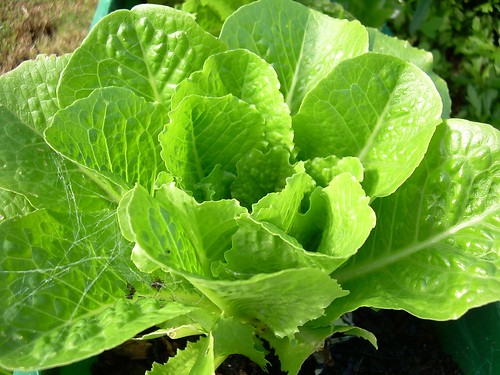
My journey to real foods has been so gradual that I really can't remember all the steps I've taken. I recently asked my husband, "What was the first thing I did to move toward healthier eating?" He thought it was probably the lettuce.  I was a little surprised. I cannot remember the last time I bought a head of iceberg lettuce, but I know that was our salad staple when we first got married.

Butter lettuce

Which greens are best?  Here is a list of the different spinach and lettuce varieties although I'm sure there are many more. Iceberg lettuce isn't bad...after all it's created by God, too. There are just so many more lettuces that are better. Nutritionally, it comes out behind romaine lettuce according to this article. We also know that the more color a real food has, the more "good stuff" is in it. God made His foods to be attractive to us! The main reason our family prefers romaine or another dark, leafy green is the taste. It just has a great flavor and iceberg is mostly just water and crunch.

Where do you get them?  The best place is in season direct from a farmer, however most grocery stores carry them. Lettuce is something that I can get organically in my area for not much of a price difference.

What about the cost?  If we eat lettuces when they are in season and get them from a fresh source like a farmer's market, I think the price is very comparable to iceberg lettuce from a store, if not cheaper. Another trick I've found when purchasing lettuce in a regular store is to buy the big tubs of organic lettuce rather than bags of lettuce. They last such a long time while it seems the bags of lettuce go bad within a day of opening. If you have a salad spinner, you can always buy a smaller quantity of lettuces in the produce department, therefore cutting down the cost and buying only what you will use. Food in the trash can is money thrown away.

Green Smoothie 

How do you use them?  Raw, in salad, of course. Mix up different greens for variety and taste. Another way to eat them raw is green smoothies. Mix them with frozen fruit, ice and water in a blender for a delicious breakfast drink. If you choose to cook them, spinach works best. We like it wilted in pasta and in some meat dishes. Any memories I have of it cooked by itself involve bacon grease, so we don't usually do that around our house. Greens like kale and swiss chard can also be braised, but I confess I haven't done this yet myself.

Your Turn:  What are your thoughts on greens?

Friday, August 12, 2011

Isn't Real Food Expensive?

The first thing people ask when the subject of healthy eating comes up is, "But isn't it expensive?" Although, I'd love to say without reserve, "Oh, no! It's much cheaper," there are a lot of variables. What's expensive for one person might be pocket change for another. Even real food diets vary quite a bit, so it is difficult to put a dollar amount on it.

Money

Here are a few of my thoughts on budgets and real food:
 
You can choose whether to pay for health now or later.
When we aren't eating well, we tend to get sick. With the money that doctors and co-pays cost and time missed from work in my husband's case, we could buy a lot of fresh, whole food.  Even if bad eating doesn't make us sick in the present, it most definitely will at some point down the road. The big killers in America are almost all symptoms of lifestyle, according to many research studies. We are also spending more on health care than most, if not all, other countries. It will cost us sooner or later.

Prevention is worth a pound of cure.
Throughout life, wealth can get us a lot of things, but it can never buy back our health. It can only pay for health care (or as I would prefer to call it, "disease care".)  Even if you can spend enough to cure your condition, you will never be as healthy as you would have been had you prevented the condition altogether.

Make good food a priority.
In a time of rising costs, food is one of the ways we can cut back, so we often take from the grocery budget to pay for other, more pressing things. In light of the health of our families, however, we would do well to consider, "Is this $3 box of cereal or that $3 bag of apples going to nourish my family better?"

Know the cheaper healthy foods.
I know what you're thinking: "That's all well and good, but I still only have so much money to spend on food." I know most of us, our family included, don't have an unlimited budget for food. Many fruits and vegetables are relatively inexpensive. So are oats, brown rice and the basic ingredients to make any meal. Find out what basic real foods in your store are cheapest.

Realize that real food may require different shopping approaches.
If you're an avid couponer switching to real foods, the truth is you won't be able to check out of a traditional grocery store paying $3 for $200 worth of groceries. In recent years, manufacturers are offering more coupons for healthy foods, but whole grains, produce and healthy meats are still not candidates for most coupon deals. We'll talk more about this in the future, but if you're a "coupon queen", real food might take some extra adjustments.

Switching to real foods is about better choices.
Just like I alluded to before, if you choose a real food over a processed one, that is one food you are cutting from your budget. You might find that the difference is negligible in many cases. Cutting out carbonated sodas, for example, will give you a lot of money towards adding in more nutritious foods. What gets expensive is buying both real and processed foods.